
In the early 1970’s, the Nifty Fifty stocks were seen as unshakable pillars of the market—just as today’s Magnificent Seven mega-cap tech giants are.
Companies like IBM, JCPenny, and Kodak once epitomized growth and safety, just as APPL, Alphabet, and Nvidia do now.
Investors then, as now, paid premium prices, seeing these stocks as “one-decision” investments.
You never sell you see, because the market always comes back.
There is no “Cycle”.
As those “pillars” soared, taking the SPX higher, the road list of individual NYSE names fell.
Momentum slowed during 1972, months ahead of the ‘market peak’ and SPX finally peaked on January 11, 1973, as momentum turned negative.
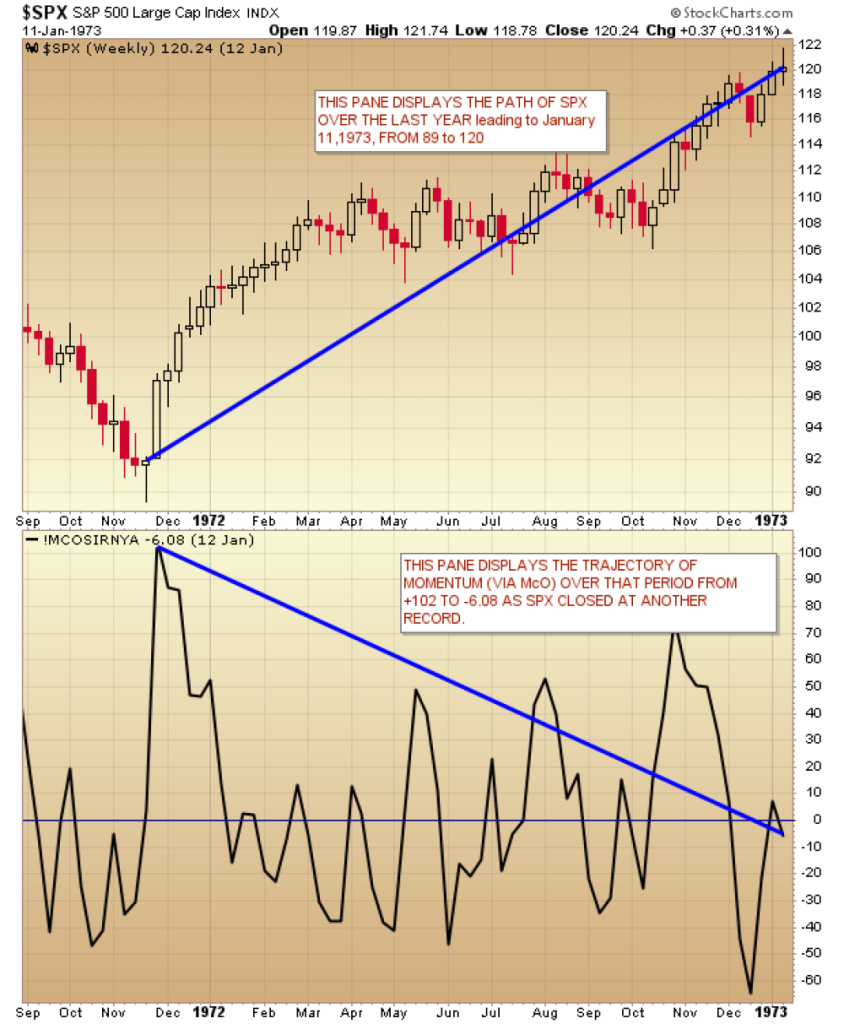
Interestingly from the 89 low where the last leg up started to the 20 top on January 11, 1973 is 90 degrees.
The Nifty Fifty’s inflated valuations began to falter in January 1973, leading to a sharp bear market in which some of these ‘safest’ stocks lost up to 90% of their value, and the entire SPX was cut in half in 19 months.
This is the same 19 month period from the Primary High in July 2007 to the end of Feb 2009 (the market bottomed on March 6th, 09).
Notice what followed that January 1973 peak as momentum turned negative:
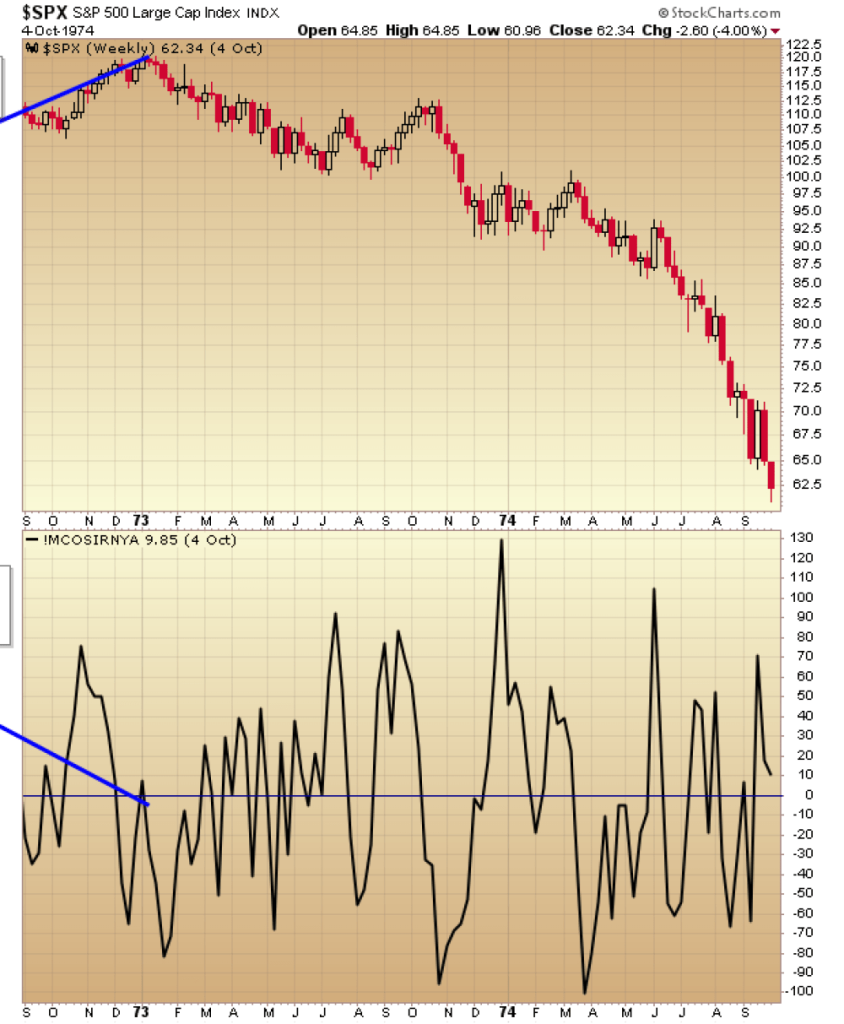
Investors in the 1970’s learned the hard way that no company is immune to market cycles, a lesson that rings true today as the Mag Seven stocks reach historic highs.
Apple’s $3 trillion valuation and Nvidia’s P/E ratio reflect the same excitement that once surrounded the Nifty Fifty.
However, the crucial parallel is the falling momentum across broad markets as the SPX reached an all-time high in 1973. Just as then internal market weakness today is masked by the dominance of a few high-flying names.
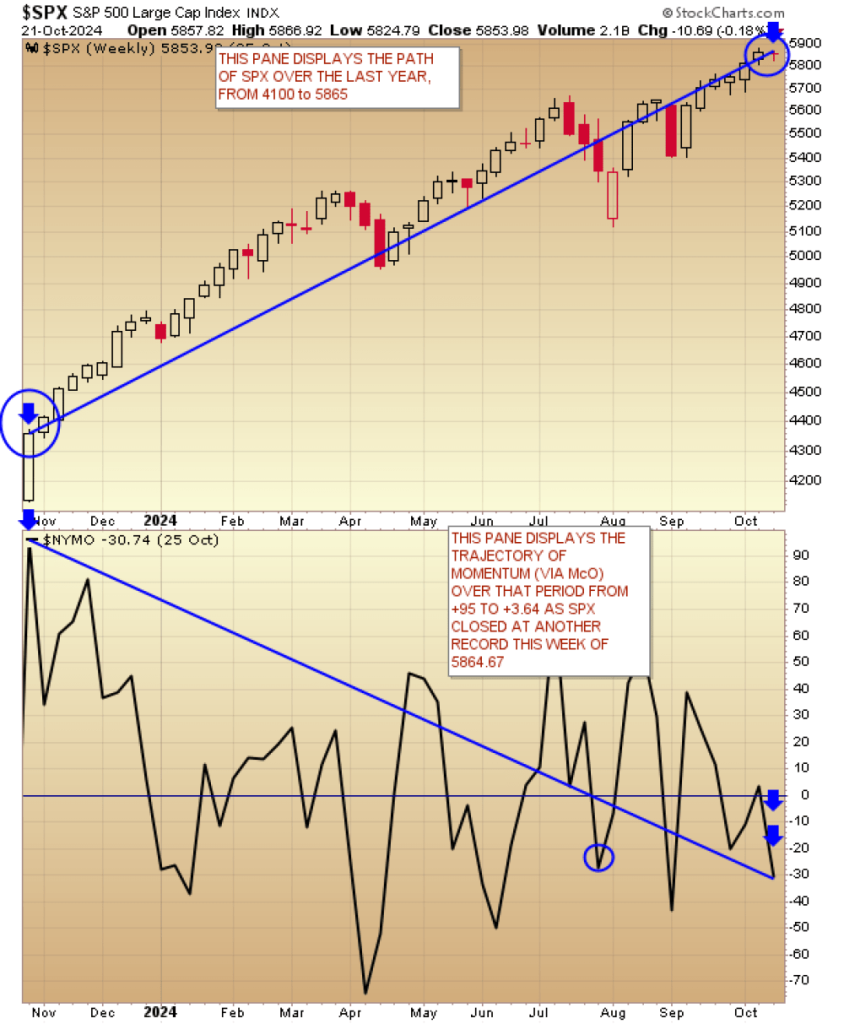
The cyclical nature of markets—and the role of investor psychology—trumps funnymentals.
It is a powerful reminder that no company can escape cycles indefinitely.
As famed trader Jesse Livermore advised, understanding recurring patterns is critical to investor success.
Investors in the 1970’s learned the hard way that overconfidence and lofty valuations ultimately lead to painful declines.
As November 2025 unfolds, the Mag Seven’s prominence similarly obscures vulnerabilities in the broader market.
The lesson is clear: overconfidence at market peaks presages steep declines.
Today’s market reveals these same strains, and we would do well to remember: while the timing, length, depth and shape of the decline that follows this setup will vary from SOMEWHAT from prior Bear Markets, this time will NOT be different.
This week the massive volatility we expected is set to erupt further with election surprises, reactions and potential conflicts that will follow in days ahead.
And then we have FOMC Cha Cha.
Tomorrow’s report will walk through the Big Cycle that points to a major top whether it is already behind us, or there is a nominal new spike ala the one week breakout in 2000 and 1973.