“The line separating investment and speculation, which is never bright and clear, becomes blurred still further when most market participants have recently enjoyed triumphs. Nothing sedates rationality like large doses of effortless money. After a heady experience of that kind, normally sensible people drift into behavior akin to that of Cinderella at the ball.” Warren Buffet
“That ain’t workin’, that’s the way you do it
Money for nothing and your chicks for free” Money For Nothing, Dire Straits
This market has spent many months building the most significant primary and secular cycle peak of our lifetimes.
Let’s not be fooled: capitalizing on the bear cycle is not quick, painless or stress free.
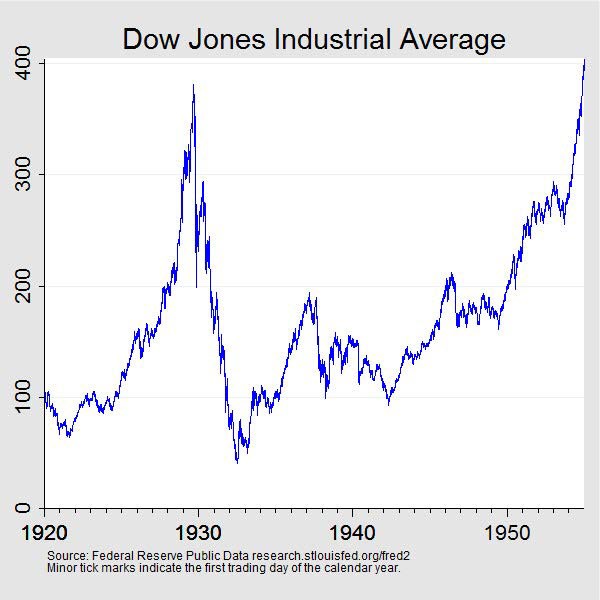
A case in point is Jesse Livermore’s legendary shorting achievement in 1929 when he amassed over $100 million—equivalent to $1.4 billion in 2025 dollars. His beat came with anxiety, false starts, patience, and “sitting tight.”
He experienced setbacks in 192o9 as the market topped. Even after the infamous October 1929 crash in which he made $millions, he endured sharp counter-trend rallies, far steeper than any of the 21st century.
Here is a brief chronology of his experience:
Livermore’s 1929 Short Position:
Building the Short Position Before the Crash.
Livermore began shorting in mid—1929, recognizing massive speculation, broad and steep non-confirmations of the leaders’ new highs, and extreme market overvaluation.
He noted stocks like RCA—akin to today’s Magnificent Seven—were outpacing economic fundamentals.
Using “tape reading,” HE OBSERVED DISTRIBUTION PATTERNS AND INTERNAL WEAKNESS despite bullish sentiment. His earliest attempts failed, forcing him to restart several times.
The Crash (October 21-29, 1929)
His short positions paid off, and his equity swelled into the high seven digits on Black Thursday (Oct 24) and Black Tuesday (Oct 29) as panic selling gripped Wall Street.
Rumors swirled that he had caused the crash. His wife later recalled bankers pleading with him to stop shorting to stabilized the market.
Staying Short Through 1932
While most of the few short traders in October 1929 covered their shorts in late 1929 or early 1o930, Livermore remained bearish, believing the economic downturn was not yet full priced in, nor was the behavior of the market confirming a bottom.
He targeted industrial stocks, particularly railroads and automakers, that had failed to confirm the new highs in Wall Street darlings like RCA.
33 months later, in July 1932, when the down bottomed at 41.22—nearly 90% from its peak—he began covering his positions, securing his fortune.
This is not about replicating Livermore’s achievement but UNDERSTANDING WHAT A TRADER MUST ENDURE TO SUCCESSFULLY RIDE A COMPLETE MARKET CYCLE.
Modern Parallels: Unprecedented Indicator Extremes
Over recent months, market dynamics have revealed extraordinary signals. These conditions present compelling opportunities for traders employing short-side strategies.
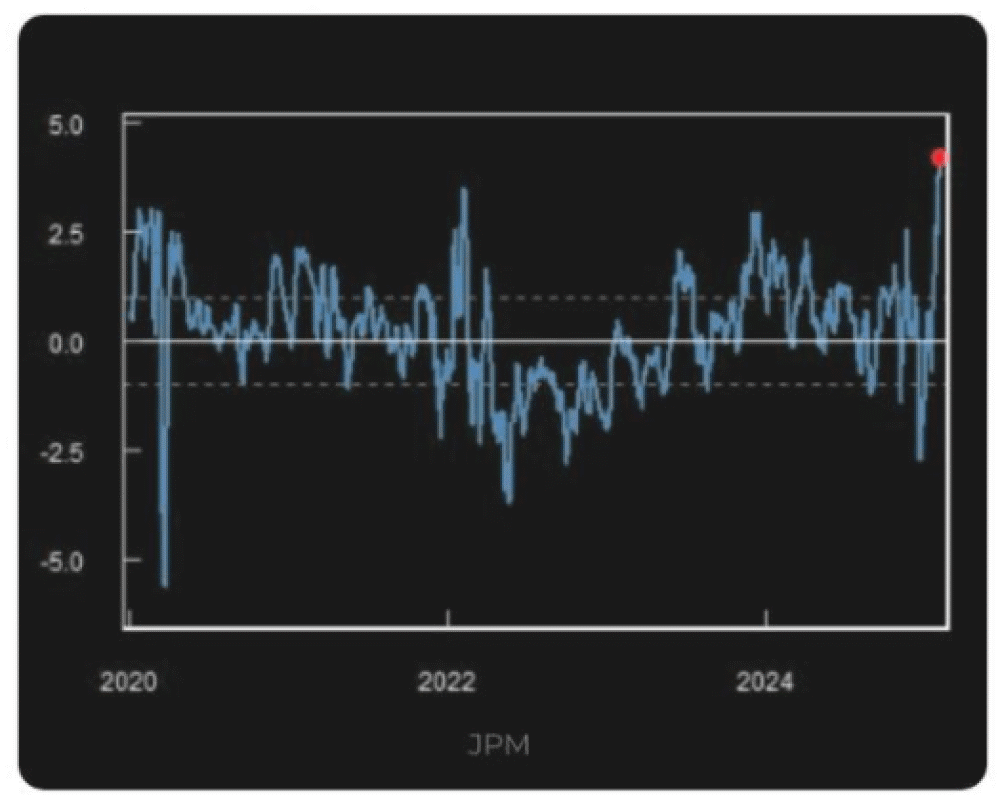
Record Retail Buying
RETAIL PARTICIPATION HAS SURGED TO RECORD LEVELS, EXCEEDING PEAKS OBSERVED AT THE 2020 AND 2022 MARKET TOPS:
—202 Peak: Elevated retail activity before a sharp downturn.
—2022 Peak: Similar conditions before a significant decline.
—2025 (NOW): Unprecedented retail speculation, surpassing both prior peaks.
Record SKEW Index Readings
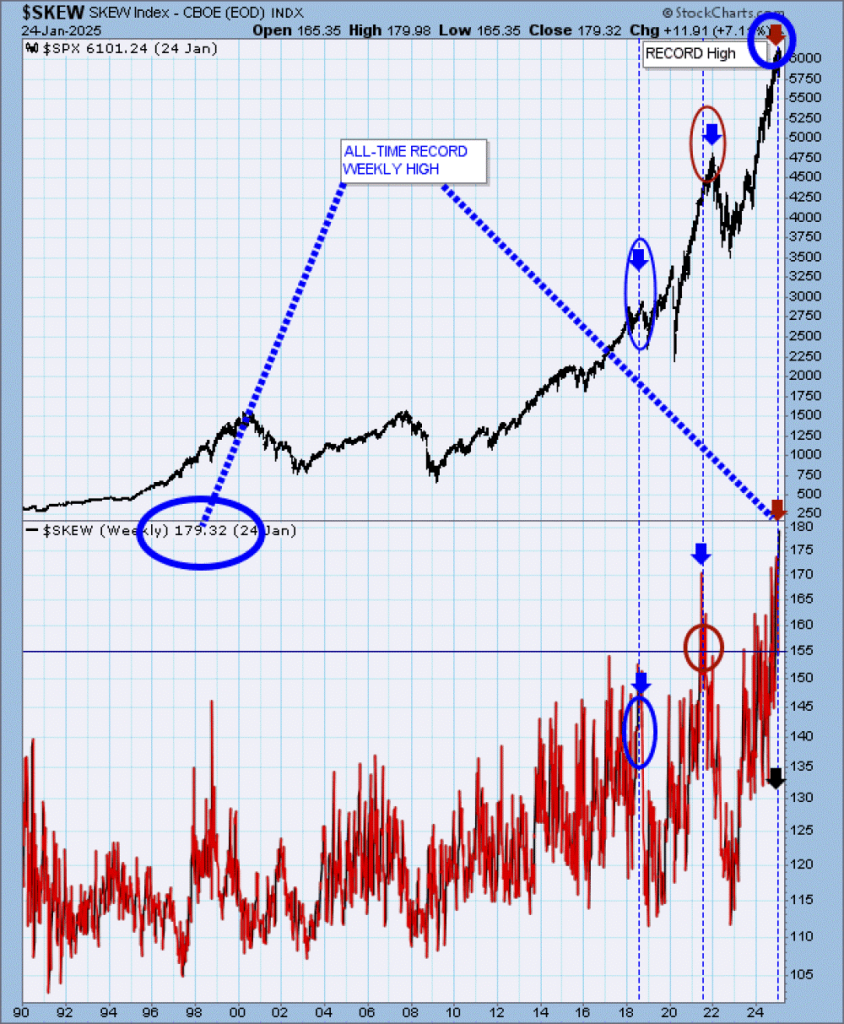
The SKEW index, which measures tail-risk pricing, peaked at significant market tops in late January.
Its readings have now substantially exceeded all prior records.
Place picture 2 here
The ISEE Sentiment Index Levels
The ISEE Index, which tracks retail investors’ call to put buying ratio, has hit historic highs.
Such levels indicate extreme bullish sentiment, generally preceding market reversals. The recent 5 day average reached an all time high, reflecting dangerous speculative fever.
Multiple Hindenburg Omens
The market has triggered three Hindenburg Omens—the most recent on Friday February 7, 2025. This technical signal, which detects instability by identifying simultaneous 520week highs and lows, has historically preceded significant market declines.
Confirmation Failures at Major Tops
A crucial theme of significant market tops is failure to confirm.
The SPX reversed with authority from a record intraday and closing all time high on February 19th.
It was the second attempt to breakout over the December 6 region rounding top.
The false breakout was confirmed on Friday February 21.
Yesterday we got follow thru with a close below the 50 day line.
This is the first CLOSE below the 50 DMA in a month.
The SPX could not continue to advance without confirmation from internal momentum and cross-market support, any more than a general could win a war without the backing of his soldiers.
The position of the Transports, IWM, the NYSE Summation Index and the NAZ Summation Index, the number of stocks above their 200 day moving averages on the NYSE and the SPX as well as the NY High Low Index and the NAZ High Low Index underscore the blaring siren of divergence and non-confirmation.
In sum, speculative sentiment now exceeds every bull market peak since 1925, 100 years ago.
Negative divergences are more profound and widespread than at any top in the past 100 years.
The Time and Price synchronicities presented in yesterday’s report underpinning the harmonics with the 1932 low speak to the idea of the potential of a 92 year top.
Market cycles continue to follow predicable patterns. While these patterns are not exact, history rhymes.
And the exactness with the pre-market action from August 2019 to late February 2020 (180 degrees later) eerily mirrors the pattern from August 2024 through late February 2025.
While some insist that “it’s different this time” , the simplest explanation is usually correct (Ockham’s Razor): in markets, “when you hear hoofbeats, think horses, not zebras.”
Yesterday the SPX dropped to within spitting distance of the 595/596 potential square-out in this time frame (early this week).
Monday’s last hour stab lower is seeing follow thru this morning undercutting Monday’s low with the SPY trading at 595.
If this region doesn’t hold it opens the door to the open gap at the 5900 to 5872 region from January 15th.